The muscles of facial expression cause wrinkles on the forehead, around the eyes, around the mouth, and on the neck after years of contracting.
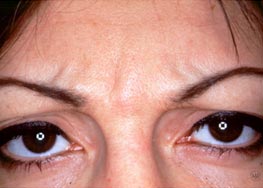
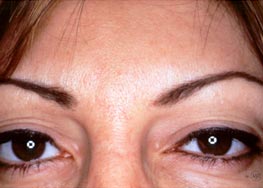
Botulinum toxin is a neurotoxin produced by the bacterium Clostridium botulinum. It is used in very small doses to block certain muscle contractions and spasms. In 2002, the FDA announced the approval of botulinum toxin type A (BOTOX Cosmetic) to temporarily improve the appearance of moderate-to-severe frown lines between the eyebrows (glabellar lines). Botox is now commonly used to treat wrinkles on the forehead, around the eyes and mouth, and on the neck. BTX-A has also been approved for the treatment of excessive sweating (hyperhidrosis).
Botox is also used for: